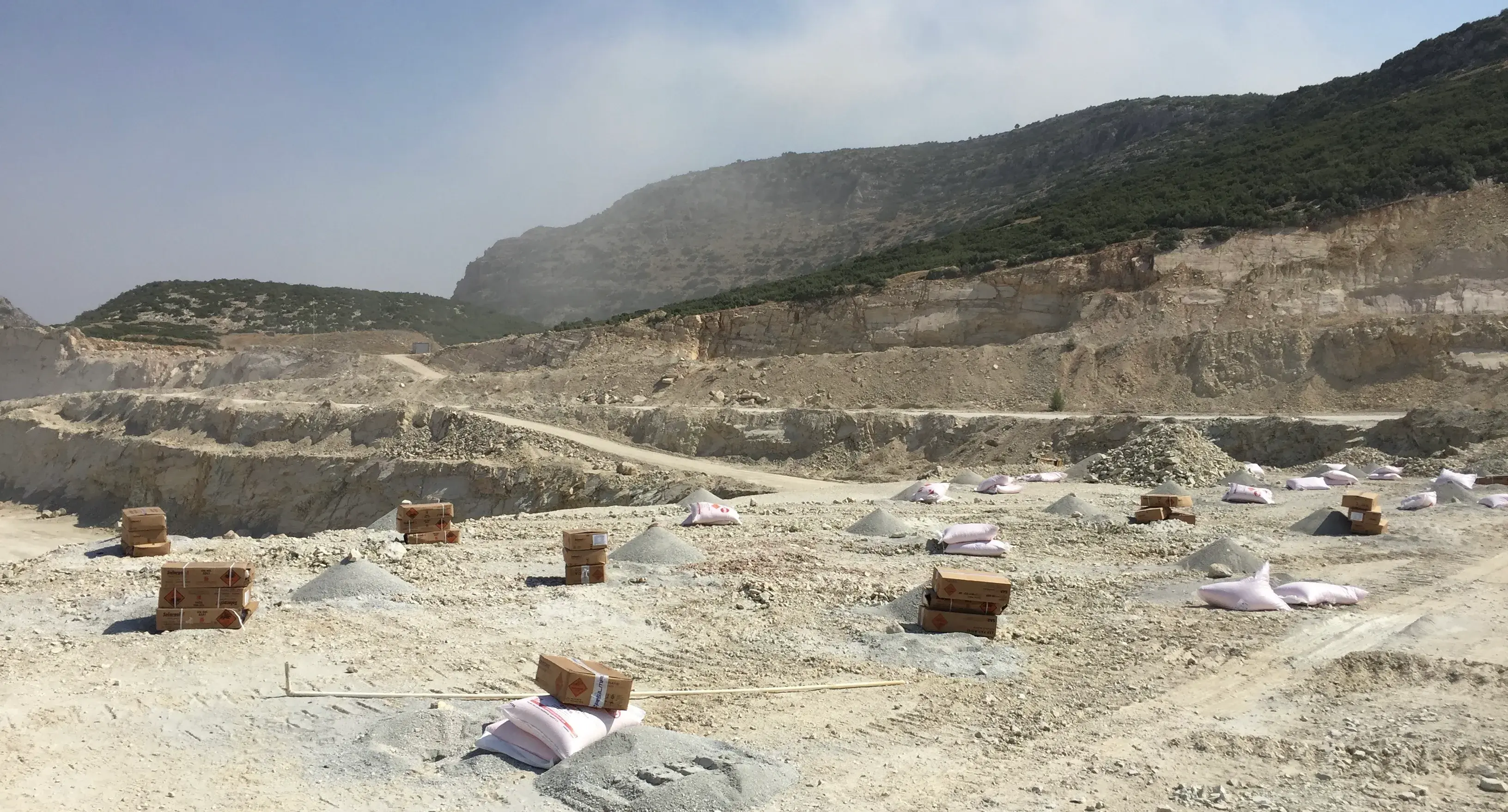
URBAN BLASTING
Urban blasting requires high attention and control due to sensitive environmental conditions. With planned blasting in accordance with USBM and DIN 4250 standards, vibration, noise and flyrock are minimized, protecting surrounding structures, infrastructure facilities and people.
Standards Used
USBM Standards
Limits the effect of blasting vibrations on structures and determines safety limits.
DIN 4150 / 4250 Standards
German standards that determine vibration limits for both human comfort and structural safety.
Application Principles
Vibration Control
Blasting design is calculated to not damage surrounding structures and buildings.
Explosive Loading
Maximum explosive amount per hole is limited.
Time Delays
Controlled delays using electronic detonators reduce vibration and noise.
Flyrock Prevention
Hole mouth is tightly plugged and safety distances are observed.
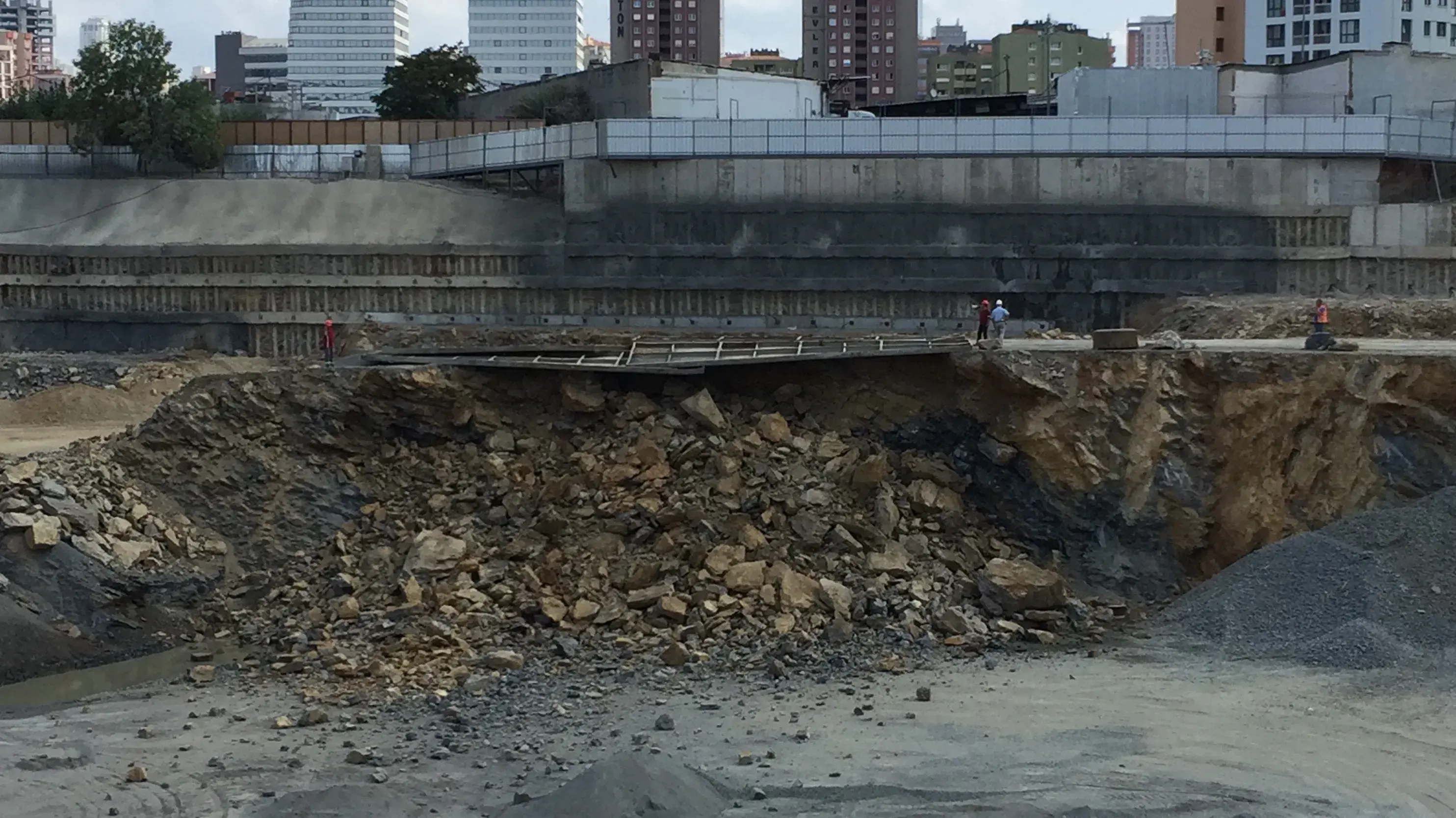

Environmental and Technical Benefits
- Protection of surrounding structures
- Keeping noise and vibration values below legal limits
- Ensuring work safety and environmental safety
- Transparent reporting throughout the project (recording with vibration measurement devices)
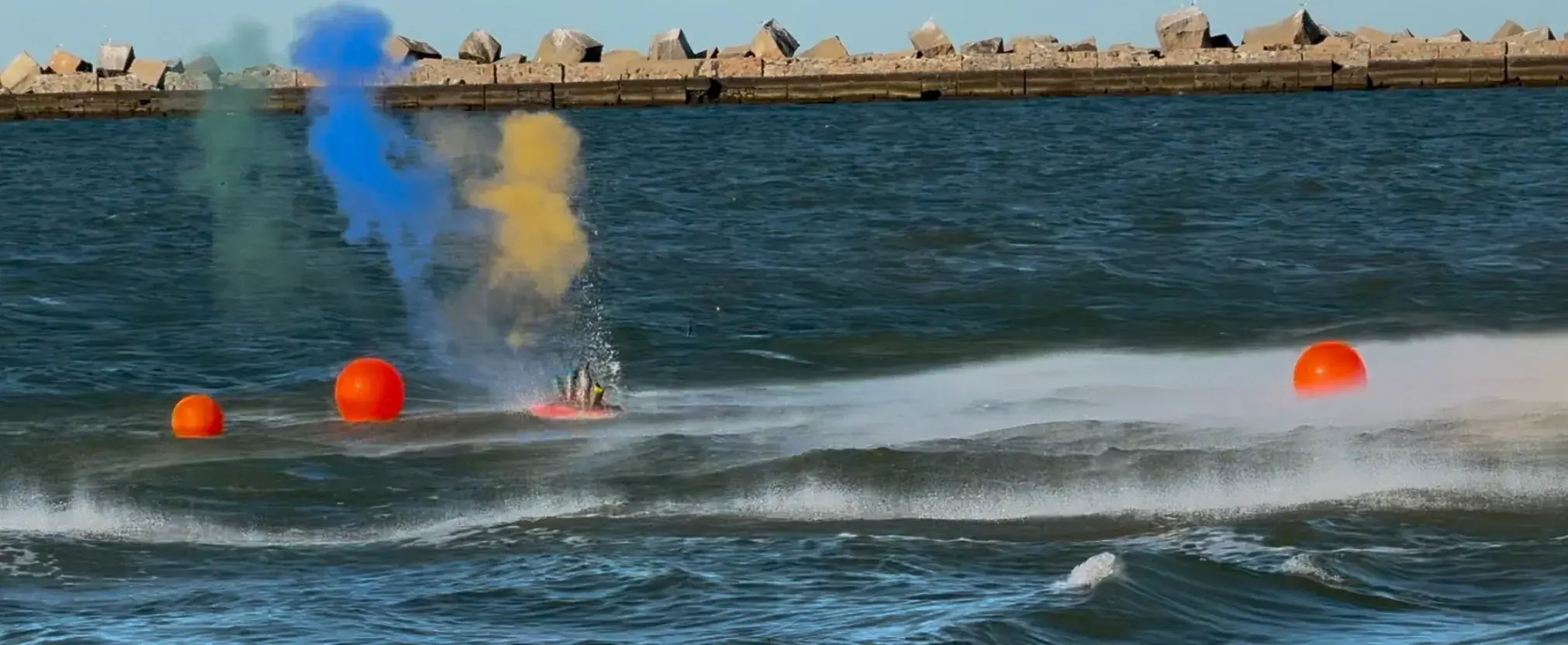
Application Areas
Port and Wharf Construction
Controlled blasting for safe excavation and foundation preparation on seabed
Dam and Hydroelectric Projects
Underwater rock excavation and tunnel opening operations
Bridge Piers and Viaducts
Foundation excavation and rock cleaning on river and lake beds
Undersea Tunnel Projects
Safe excavation and opening operations in underwater passages
Technical Features
- Controlled blasting that minimizes environmental impact
- Special measures for protection of marine life
- Explosive systems resistant to high water pressure
- Underwater imaging and monitoring technologies
- Operation planning suitable for wave and current conditions